
Volume compatible with the operation
Alarms with no associated action are reviewed or eliminated, reducing what reaches the control room.

Specialized Services & Consulting
Alarm rationalization to reduce operational overload and improve alarm system effectiveness
Consulting to review the plant's alarm set, eliminate events with no operational value and structure sustainable configuration criteria.
Work aligned with ISA-18.2, IEC 62682 and EEMUA 191 best practices

Context
In many plants, alarms were created over the course of projects and modifications, without a common criterion. The result is a set in which critical events compete for attention with repetitive warnings that nobody addresses.
Rationalization reviews this set alarm by alarm, with participation from operations, maintenance and engineering teams.
Benefits
Alarms with no associated action are reviewed or eliminated, reducing what reaches the control room.
Classification now reflects actual consequence and available response time.
Every alarm that is kept has documented cause, consequence and expected action.
With less noise, relevant abnormal conditions are noticed earlier.
The alarm philosophy and defined indicators prevent the system from reverting to its previous state.
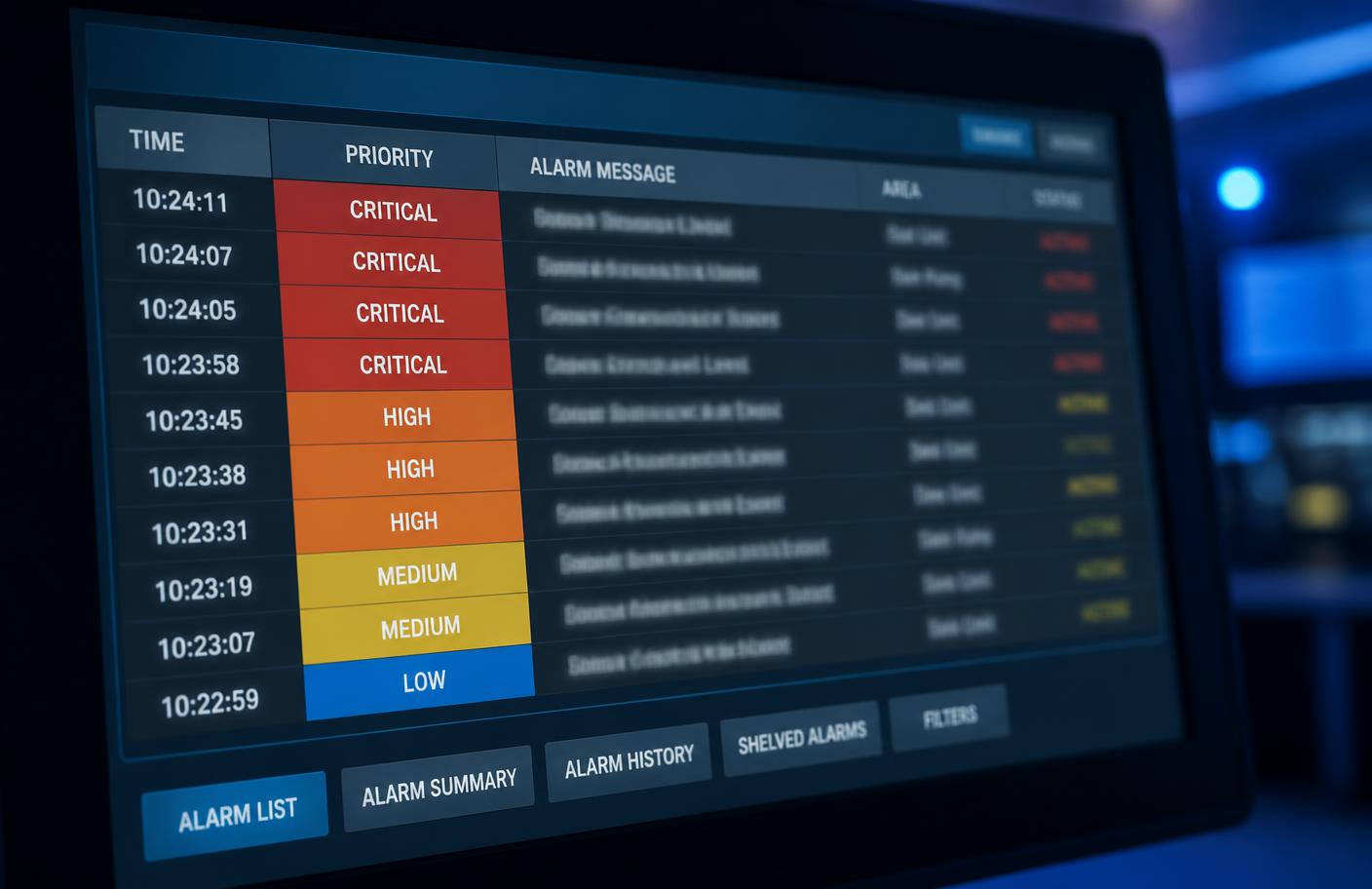
In focus
Rationalization takes place in sessions led with operations, maintenance and engineering. It is in this joint work that the meaning of each alarm and the action it should trigger are defined.
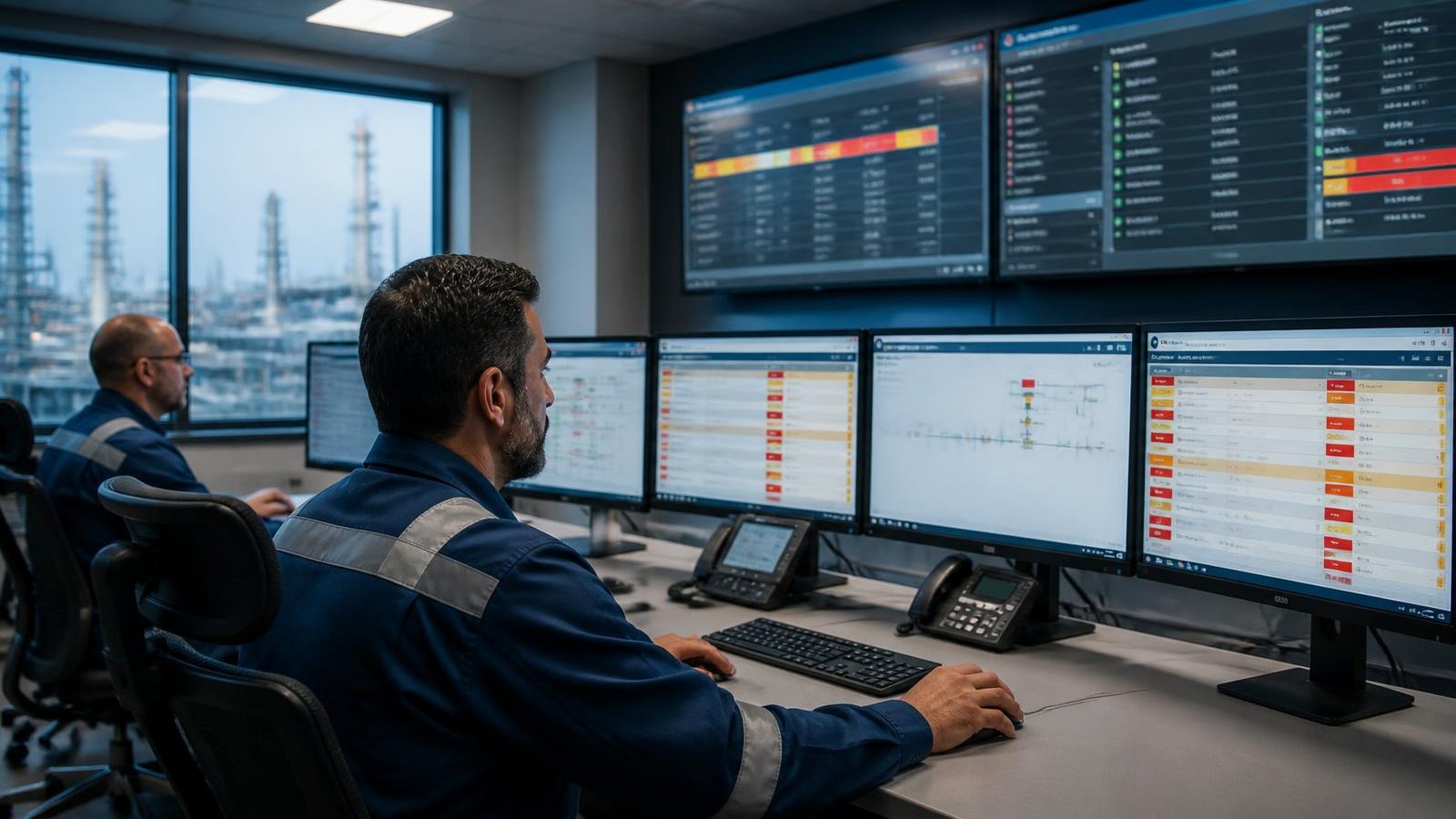
In focus
In addition to the rationalized base, the work delivers the alarm philosophy, tracking indicators and an improvement plan to keep the system in adequate condition.
Capabilities
Assessment of alarm behavior and the main sources of noise.
Development or review of the document that defines configuration criteria.
Alarm-by-alarm review sessions with the teams involved.
Revised set, with defined priorities, limits and messages.
Also part of the delivery
Application
The work starts with a diagnosis of the current system and defining criteria in the alarm philosophy. Rationalization sessions then review each alarm with the teams, producing a revised base and recommendations for implementation in the control and supervision systems.
Business value
The quality of the alarm system directly influences the ability to respond to abnormal situations. Rationalizing means giving the operator back the ability to recognize what requires immediate action, with documented criteria that support audits and process safety reviews.
Talk to the IDUS team about the current scenario and how to conduct rationalization at your plant.
Talk to IDUSKeep exploring
Diagnosis, architecture and optimization of industrial networks
Diagnosis, review and definition of communication architectures for industrial and corporate environments.
Learn more